Chapter 10 of 19
Some Other Prominent Brethren
DR. EDWARD CRONIN
Dr. Edward Cronin learned Christian liberty, ecclesiastical and ministerial, even before Darby, but only in the germ and with much simplicity. He was born in England, and being a Roman Catholic, he came early under the rough and ready discipline of his bishop. It was in Cork, England, that a Roman shepherd, finding Cronin reading a Protestant copy of the Scriptures, knocked him down right on the spot. This served to open the door for his escape from Catholicism.
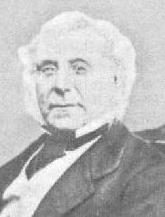
He proceeded to Dublin as a medical student, and here learned from his study of the Bible that Christendom was very anomalous, so he very sturdily refused to join himself to any sect. He was allowed to take communion in the Lord‘s name by the Independents for a while, but later was excluded because he declined to become ―a member‖ of their church like the rest. Soon afterwards, God led him to take a simple Christian stand based upon the N. T pattern. Some historians believe that he is the one who received this new light first.
After a long life of devotion and fidelity to the Lord and His people, he passed away in 1882 to be with Him Whom he had devotedly loved and served. His end was more than peace, for constantly upon his lips was the name of the Lord. One of his last utterances was the well-known verse:
Glory, honor, praise, and power,
Be unto the Lamb forever Jesus Christ is my Redeemer Hallelujah! Praise ye the Lord.
K.V. SIMON OF INDIA
K.V. Simon was born at a time when the dawn of renaissance in life and letters was yet to break on the Kerala horizon, in a small village called ―Edayaranmula.‖ There was little facility for formal education beyond the primary level. Young Simon‘s formal schooling came to an end when he was just thirteen and at that tender age he was obliged to accept the post of a teacher in the local school. However, his elder brother K.V. Cherian, a distinguished scholar, had given him a good start in ―Sanskrit,‖ one of the ancient languages of the world.
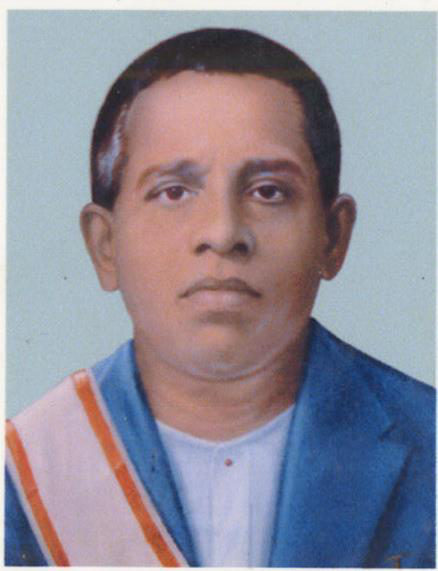
It is amazing how with his meager background, Simon was able to reach great heights as a scholar, poet, singer, and preacher during the 61 years of his life (Feb, 7, 1883 to Feb 20, 1944)
He not only witnessed historic changes in the political and cultural life of India, but also outgrew his shell fast and came to be recognized as a beacon light, enhancing the quality of life around him
Mahakavi (great poet) was a polyglot who knew many languages like Tamil, Telugu, Kannada, Hindustani, English, Greek, Latin, Hebrew, and Syrian. In his mastery of Sanskrit, he can be compared with any great scholar in India. In his native language, Malayalam, he was a gifted poet who combined in himself classical grandeur and lyrical flavor. He was also a prose writer of rare charm, a composer of soul-stirring Christian hymns, an eloquent and scintillating speaker, an outstanding teacher, and an invincible debater. Besides all of this, he had a profound knowledge of the Hindu religion and a remarkable mastery over Christian theology. Above all, he was a towering spiritual leader who lived a life of great sacrifice with steadfast faith in his Master for whom he worked with great zeal and devotion.
It was in 1931 that he published his ―Veda Viharam‖ or ―Rambles in the Bible,‖ an epic in Malayalam poetry. In style, this work follows closely the model of the ―Ramayana‖ and the ―Mahabharata‖ of Ezhuthachen, the father of Malayalam poetry. By its beauty of diction, superb flights of imagination and general grandeur, it reminds one of Milton‘s ―Paradise Lost.‖
Mr. Simon not only wrote poetry and hymns, but also recited with sweetest voice and style to the delight of his audiences as he mesmerized them.
It is not easy to explain these great achievements unless one considers him a versatile genius and a chosen instrument of God. Such extraordinary men appear in life but once in a while. Indians are fortunate to have had one such man in the history of India.
MR. G. V. WIGRAM
George Vicesimus Wigram was born in 1805 in England. He was the twentieth child (hence his middle name) of Sir Robert Wigram, merchant and ship owner. Two of his brothers were distinguished men; James was Vice Chancellor in the Old Court of Chancery, and Joseph Cotton was the bishop of Rochester.
Mr. Wigram became an associate of Messrs. James Harris, B. W. Newton, and J. N. Darby. He was one of the pioneers who founded the Brethren movement. He was deeply impressed with the unsatisfactory results of Scripture study using the aid of Cruden‘s concordance. It gave him no clue as to what word in Hebrew or Greek lay behind the English translation. He poured forth his troubles to a clergyman who was well acquainted with both languages. This resulted with his interests becoming centered on the preparation of concordances, which would help Bible students who
Possessed little or no knowledge of the original languages. He spent more than fifty thousand pounds to finish this work. Christ, and he alone, was dear Mr. Wigram‘s one object in life. Mr. Wigram died at age seventy-three, on January 1, 1879.
WILLIAM KELLY
William Kelly was one of Christ‘s special gifts to the church. He was born in May, 1821, in England. He was educated at Downpatrick and Trinity College. In his studies at Dublin University, he had the highest honors in the classics. He was brought into Christian liberty through a lady in the Acland family who directed him to I John 5:9-12. He was twenty-four years old when he first met Mr. Darby. He later edited Darby‘s thirty-four volumes of collected writings, and also Darby‘s five volumes of the Synopsis. He was a man of recognized erudition, with powers of original research. He possessed rare logical skill, fine precision, and keen controversial force, with high moral power, and spiritual culture.
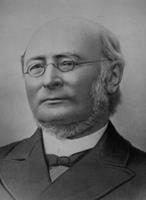
Kelly was editor of the periodical entitled, ―The Bible Treasury‖, which commenced in 1856. This journal is replete with the writings of the Brethren‘s leading expositors; making it a half-century‘s reliable testimony to the restored truths of practical Christianity. He aided Dr. Tregelles in his investigations as a biblical textual critic; and in 1860, published a critical edition of ―The Revelation‖. Professor Heinrich Ewald of Gottingen declared it as the best piece of English work of the kind he had seen.
It is impossible to divide or even enumerate the many works of a learned character that proceeded from Mr. Kelly‘s pen. Some outstanding are his lectures on the Revelation, in which he analyzed Elliott‘s Horae Apocalpticae. Also, his Doctrine of the Holy Spirit was an exposition of rare value, and declared by Dr. Bledsoe as the best discussion extant on the subject.
Mr. Kelly had a remarkable library of fifteen thousand volumes, which was said to weigh seventeen tons. It included the Great Codices (some in facsimile); all the great polyglots, the works of the Fathers, and the great schoolmen. It was replete in departments of science, philosophy, and history. It was especially rich in the classics, ecclesiastical history, and theology, including many very rare items connected with biblical research.
He has been the subject of frequent suggestive comments from the pen of C. H. Spurgeon, who in his commentary refers to Mr. Kelly in the following terms:
First, as a leading writer of the exclusive Plymouth school. Secondly, as an eminent divine of the Brethren school, which sometimes expounds ably, but with a twist towards the peculiar dogmas of his party. Thirdly, Spurgeon remarks, ―We are sorry to see such a mind as Mr. Kelly‘s so narrowed to party bounds.‖ Fourthly, ―It is a pity that a
man of such excellence should allow a very superior mind to be so warped.‖
And lastly, he speaks of him as a man ―who was born for the universe, has narrowed his mind by Darbyism.‖ Mr. Kelly highly valued Mr. Darby‘s writings, and circulated them as widely as possible. He looked upon Darby as unapproachable for Scriptural unfolding of long-lost truths, and for dependence upon God and His Word. ―Read Darby‖. he used to say, to the last. He often spoke of Darby, and always with great affection. He loved to speak of all that he had done for Christ, of his great abilities, and his consecrated life. Mr. Kelly passed away on March 27, 1906.
C. H. MACKINTOSH
Perhaps there are comparatively few English-speaking Christians in any part of Europe or America widely read on Scriptural subjects, who are not familiar with the initials, C. H. M.
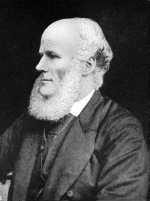
Mr. Charles Henry Mackintosh was born in Ireland, in October 1820. At the age of eighteen, he experienced a spiritual awakening through letters received from his sister after her conversion. He obtained peace through the perusal of a paper entitled, ―Operation of the Spirit‖, by J. N. Darby; being specially helped by words to the effect that it is Christ‘s work for us, not His work in us that gives peace.
In 1844, he opened a secular school at Westport. In 1853, however, he gave up his scholastic duties. He then went to Dublin and came in contact with J. G. Bellett and other devoted saints of God. The influence of his writings cannot be estimated. He died in November 1896.
GEORGE MULLER: THE MAN OF PRAYER
Mr. George Muller was born in Prussia, and in his youth plunged into sin and folly. His conversion was sudden. His life appears at once to have turned wholly to God, and rapidly grew in the knowledge of the Scriptures. He was led to reside in Devonshire, and soon became associated with Mr. Henry Craik in the ministry.
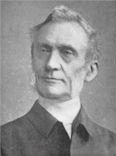
In 1832, Messrs. Muller and Craik both came to Bristol and ministered together at Bethesda Chapel. Already in Devonshire, they had learned to lay aside the traditions of ―congregationalism‖, such as infant baptism, pew rents, a separate ministerial order, and a stated salary. They saw that the Lord‘s Table was for all believers, irrespective of denominational views and distinctions.
Mr. Muller‘s heart was led to care for orphans. In the beginning, he had laid down for himself the role that, beyond making known the existence of the institution, he would never apply in any way to man for help. Furthermore, he would never reveal to any human being, outside of those associated with him in the work, the state of the funds, however pressing the need might be. The aim he set before
him was not merely for the benefit of the orphans, but much more that it might be a witness to all that God is, as
ever of old, the hearer of prayer. Encouraged by God‘s manifested help, he sought to enlarge his ministry. He made a decision early in his ministry that not under any circumstances would he go into debt. He built altogether five orphanages, with accommodation for 2050 orphans and the staff. For seventy-five years he looked to God only for his needs. He never asked others for help and the Lord miraculously supplied all that he needed. The money that passed through his hands for the orphans in answer to prayer, considerably exceeded a million sterling. Leaving his son-in-law, Mr. James Wright, in charge at Bristol during his later years, from 1874-1892, he traveled and preached in Europe, North America, Australia, India, China, and many other countries.
The secret of Muller‘s useful life was his simple faith in God and His Word. At the age of ninety-three, in 1898, this man of God was suddenly called from his service on earth into the presence of the King above.
AN INTERVIEW BETWEEN MR. DARBY AND MR.
MULLER
After the interview between Mr. Darby and Mr. Muller in July 1849, a report was put forth by a Mr. W. H. S., who was a leading brother in the Bethesda fellowship, purporting to give the conversation that took place between these two brothers. It is said that Mr. Darby, speaking of B. W. Newton‘s tracts, remarked to Mr. Muller, ―As you have now judged the tracts, the reason why we should not be united no longer exists.‖ To this Mr. Muller is reported to have replied, ―I have only ten minutes now free, having an engagement at one o‘clock, and therefore I cannot now enter on this subject; for you have acted so wickedly in this whole affair, that many things have to be looked into before we could be really united again.‖ With this, it is said, the interview closed. This conversation has been taken to prove by some that in Mr. Darby‘s judgment, all ground for separation was removed in 1849, and that henceforth it was only personal feeling between the leaders that kept up the breach. From this it is argued that we can safely ignore the personal element, and act upon Mr.
Darby‘s reported statement that, ―The reason why we should not be united no longer exists.‖
J. G. BELLET
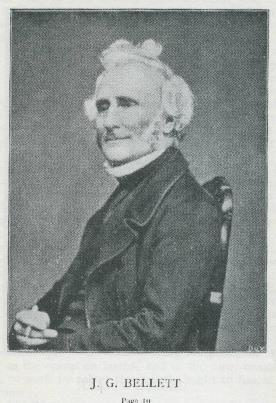
John Gifford Bellet was born in Dublin, in 1795. In Trinity College he met John Nelson Darby and they remained as loyal friends until their death. Both were strong in classical scholarship and both read for the bar-Bellet in London and Darby in Dublin
By the year 1827, Darby and Bellet started to attend the famous ―Powerscout prophecy‖ meetings. In 1828, Bellet, Darby, Hutchinson, and Cronin started breaking bread together. Bellet was the author of many famous books. He passed away in 1864.
ANTHONY NORRIS GROVES
Anthony Groves was born in 1795. His father was part owner of a ship, the ―Royal George‖ that sank with many men. Anthony was a very successful dentist. He went to Baghdad to preach the gospel.
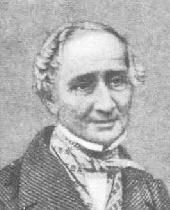
Famine, plague and pestilence killed thousands of people in Baghdad. During his three-year stay there, his wife, Mary Groves, died of the dreadful plague. From Baghdad, Mr. Groves and his family went on to India. Christians in south India are indebted to Mr. A. N. Groves. His ministry is responsible for the great revivals in
Andrapradesh, Tamil Nadu, and Kerala. J. C. Arulappan was Mr. Groves‘ disciple. After Arulappan died, Mr. Handler Bird visited and helped them. He went to be with the Lord in 1853.
F. W. GRANT
F. W. Grant was born in London, on July 25, 1834. He went to Canada when he was twenty-one years of age. He and his brother, R.
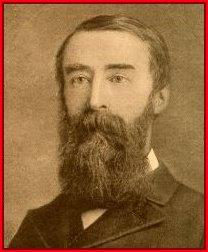
T. Grant, were both Church of England clergymen in Canada. At first, they were much opposed to the Brethren, and considered their teachings subversive of sound theology and proper ecclesiasticism. But through the literature, they were led to change their viewpoint. Both resigned their parishes to take their places among the despised Brethren, who gave no recognition to clerical titles, and looked with disdain on costly, ornate houses of worship and set forms of worship.
Grant came to the United States and lived in Brooklyn, and then in Plainfield, N. J. until his death. He had been a diligent student of the book of Psalms for years. Not only was he attracted to the Psalms contents, but also the form in which they were written: their divisions in the Pentateuch, the acrostic form of a number of them, and their evident relation one to another in various groups. All these things impressed him with the fact that God had written them upon a distinct plan in which the numerical significance of the Psalms,
group and book had a clearly marked and important place. But if the Psalms were written thus, why not all Scripture?
So he went on until he found the same divine harmony throughout the inspired Word. He set to work, and with unbounded patience produced The Numerical Bible issued in several volumes. He was also the author of Facts and Theories as to a Future State, Genesis in the
Light of the New Testament, Spiritual Law in the Natural World, The Crowned Christ, and many other precious books and pamphlets which have had an extensive circulation on both sides of the Atlantic.
He loved Christ more than anyone else. He made a significant utterance shortly before his earthly departure. Sitting propped up in his chair with the Word of God open before him, as was his custom, he said, ―Oh, the Book, the Book, the Book.‖ Thus he passed on to be with Christ on July 25, 1902, on his sixty-eighth birthday.
SIR ROBERT ANDERSON
Sir Robert Anderson, though of Scottish descent was born in Dublin on May 29, 1841. Before his death in 1918, he was widely recognized as a popular lay-preacher, an author of best-selling books, and one of the most capable ―defenders of the faith‖ at a time when the ―higher criticism‖ was threatening the church. His father, Matthew Anderson, was crown solicitor in the Irish capital, and was descended from one of the ―No Surrender‖ group of Derry defenders. His father was also a distinguished elder in the Irish Presbyterian Church. Robert was educated privately in Dublin, Paris and Boulogne; in 1859 he entered Trinity College, Dublin, graduating in 1862.
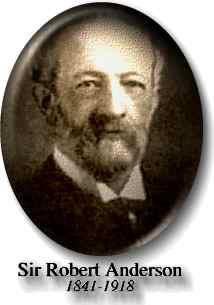
In 1863 he was made a member of the Irish Bar and two years later in 1865 he assisted the Irish Government in treason charges. His special knowledge of the ways of conspirators led to his appointment as Irish agent at the Home office, and his becoming chief of the criminal investigation department, Scotland Yard. This was at a time when London was in the midst of the ―Jack-the-Ripper‖ scare.
W.H. Smith on the floor of the House of Commons stated that Sir Robert had discharged his duties with great ability and perfect faithfulness to the public. Raymond Blathwayt, in Great Thoughts, wrote: ―Sir Robert Anderson is one of the men to whom the country, without knowing it, owes a great debt.‖
He authored seventeen major books on Biblical themes. ―The Coming Prince‖ is a commentary of the book of Daniel dealing with the seventy weeks. Archaeological discoveries and extensive research by Sir Robert Anderson have conclusively proved the exact dates of the seventy weeks of Daniel.
Sir Robert Anderson was a giant among giants. At his retirement, Queen Victoria knighted him and in 1901, King Edward VII made him Knight Commander
HENRY MOORHOUSE
Henry Moorhouse was born in the city of Manchester. When he was very young, he was sent to jail on more than one occasion. Later, he joined the army, but was bought off by his father at a considerable cost. Once, while he was passing the Alhambra Circus in Manchester, he heard a man, Richard Weaver, preaching. He listened to the Good News and converted to God. He at once sought in every way he could to bear witness to his Savior‘s grace.
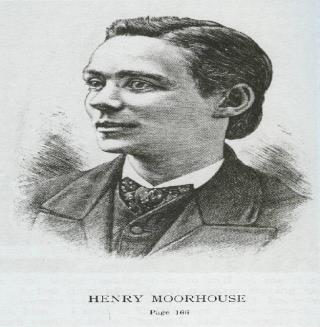
In those early days, it was his joy to spend much time in distributing tracts and speaking to individuals personally about their souls. In the streets and marketplaces, he called aloud to multitudes to ―Flee from the wrath to come.‖
Many of the present generation would hardly know the names of the earnest Christians, who were once well-known, with whom Henry Moorhouse came into contact, and whose names it is a pleasure for older Christians to recall. Among whom were: Richard Weaver, from the coal pits, John Hambleton, the converted actor, Edward Usher, a dockyard laborer, William Carter, the converted sweep, Henry Varley, a butcher, Joshua Poole, known as ―Fiddler Joss‖, Reginald Radcliff, the Liverpool lawyer, Brownlow North, the man of fashion and wealth, H. Graltan Guinness, D. L. Moody, Ira D. Sankey, C. H. Spurgeon and many others.
Like the apostle of old, he had visions of God. Upon one occasion, he saw in his sleep three young men in Manchester, each strangely attired in a white jacket, on which were the words legibly written, ―These men are going to hell!‖ The place appeared to be near the infirmary, and before them was a deep burning lake of fire, unperceived by them. Henry called out loud for them to stop, but they took no heed, until he fell down upon his knees and cried to God, ―Lord, it is not by might, nor by power, but by Thy Spirit.‖ The men then turned back in haste, having discovered their danger. This dream happened on a Friday night. On the Sunday evening following, when Henry was preaching in the Alhambra Circus, those three identical young men came into the place, and before the meeting closed, were all on their knees crying out for mercy, and came to accept the Lord Jesus Christ, and pardon of their sins.
Incessant labors soon told on Henry Moorhouse‘s strength. At length, he set out for the United States, arriving in Philadelphia in 1868. So hearty was his welcome, that he was free to pay five more visits in the following ten years. How he became ―the man who moved the man who moved the world‖ is best told in D. L. Moody‘s own words:
In 1867, when I was preaching in Dublin, at the close of the service a young man, who did not look over seventeen, though he was older, came up to me and said he would like to go back to America with me and preach the gospel. I thought he could not preach it, and I said I was undecided when I could go back. He asked me if I would write to him, as I did not know whether I wanted him or not. After I arrived in Chicago, I got a letter saying he had just arrived in New York, and he would come and preach. I wrote him a cold letter, asking him to call on me if he came west. A few days after, I got a letter stating he would be in Chicago next Thursday. I did not know what to do with him. I said to the officers of the church, ‗There is a man coming from England, and he wants to preach. I am going to be absent on Thursday and Friday. If you will let him preach on those days, I will be back on Saturday, and take him off your hands.‘ They did not care for him to preach, being a stranger, but at my request, they let him preach. On my return on Saturday, I was anxious to hear how the people liked him, and I asked my wife how that young Englishman got along. How did they like him? She said they liked him very much.
‗He preaches a little different from what you do. He tells the people God loves them. I think you will like him.‘ I said she was wrong. I thought I could not like a man who preached contrary to what I was preaching. I went down on Saturday night to hear him, but I had made up my mind not to like him, because he preached different from me.
After graphically describing the six nights on John 3:16, Moody concludes:
In closing up that seventh sermon, the young preacher said, ‗For seven nights I have been trying to tell you how much God loves you, but this poor stammering tongue of mine will not let me. If I could ascend Jacob‘s ladder and ask Gabriel, who stands in the presence of the Almighty, to tell me how much love God the Father has for this poor lost world, all that Gabriel could say would be that, ‗God so loved the world, that He gave His only begotten Son, that whosoever believeth in Him should not parish, but have everlasting life.‘ I have never forgotten those nights. I have preached a different gospel since, and I have had more power with God and man since then.
During the last few years of his life, he found work something akin to that of his early days in preaching and selling Scriptures from a Bible carriage. In two years he sold over 150,000 Bibles and Testaments,
and gave away millions of books and tracts. In 1876, his service was evidently closing. His last year of labor was one of much suffering. The doctors said his heart was twice the size it ought to be; yet he was ever bright and happy. Near the end of his life he said, ―If it were the Lord‘s will to raise me up again, I should like to preach from the text, ‗God so loved the world.‘
On December 28, 1880, in his fortieth year, he passed home to receive the ―well done‖, and to enter into ―the joy of his Lord.‖
ANDREW MILLER
Andrew Miller was born in England on January 27, 1810. While supervising a large London business, Mr. Miller was for a considerable time the voluntary pastor of a Baptist church on William Street. As light from the Word of God was followed, the sectarian principles were left behind, and the believers gathered on Scriptural lines; Mr. Miller continuing to labor as an honored brother among them. As an author, his name will be remembered as long as his ―Papers on Church History‖ or his meditation on the Song of Solomon, on the Psalms, and other works continue to be read. He also wrote, The History of the Brethren Movement.
In telling how he had been led to cast in his lot with those who thus gather to the name of the Lord Jesus, and to break bread every Lord‘s day, he said he had been a member of a church for some time previously, when one day he was invited by a Christian gentleman to attend a Bible reading which was held in his drawing room each week.
I accepted the invitation, and went. But such a stranger I was to that kind of thing that I went in full evening dress and found myself the only one so attired, which made me feel uncomfortable. We were invited into the dining room for refreshments, and then adjourned to the drawing room for Bible reading. After prayer, a passage of Scripture was reverently read, and a deeply interesting conversation followed. As I listened to the unfolding of the inspired volume, I began to discover that the Bible contained such wonderful truths, to which I was an entire stranger, that I soon forgot my evening dress, and made up my mind to attend the next weekly Bible reading if the host would invite me. I attended weekly; learning more and more of the wonderful truths of God, and becoming better acquainted with the great purposes of redeeming love and grace. Thus I was led to cast in my lot with the so-called ―Brethren‖.
Andrew Miller wanted to share the good news with others. He had a passion for souls, and was a true evangelist, as well as a spiritually qualified teacher? When he saw the multitude, his soul was stirred. Rarely ever did he preach the gospel without tears. Andrew Miller fell asleep on May 8, 1883.
THOMAS NEWBERRY
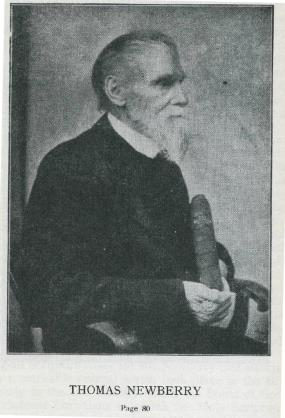
Thomas Newberry was saved by the influence of his Christian mother and his godly elder sister. His Christian life commenced with a love and reverence for the Holy Scriptures, which were his food and ―the joy and rejoicing of his heart‖ (Jeremiah 15:16).
Throughout his active life, he became mighty in the Scriptures (Acts 18:24), and was one of the most reliable and profitable expositors of the Bible. He studied the Scriptures diligently in the original Hebrew and Greek languages for sixty-one years.
Pursuing deep studies for twenty-five years, he produced his most valuable work, The Englishman‘s Bible. It is now widely known and greatly prized by Bible students as one of the best helps ever published for enabling ordinary readers to discern the beauties of the original ―sacred Scriptures.‖ This work has been highly commended by competent scholars, who express admiration at the immense labors bestowed upon the book and the
valuable and reliable information given in its marginal notes. This enables Christians to understand somewhat of the precious treasure, which God has given in this, His own Word.
Diligent Scripture study led Mr. Newberry into an association with a remarkable revival that took place in the British Isles early in the last century, when the Spirit of God led many eminent Christians to search the Holy Scriptures in relation to their ecclesiastical associations. The conviction was forced upon many of their souls that much of the teaching was not in harmony with the Word of God; that many of the customs were based upon expediency rather than the conformity to ―the law and the testimony‖ (Isaiah 8:20).
Also, that the principles and practices (which were plainly recorded in the epistle to the Corinthians and other Scriptures, as characteristic of the churches of God as founded by the apostles after the divine pattern was given to Paul, ―the wise master builder‖ was not being observed, although I Corinthians 1:1-2 said they were binding upon ―all that in every place call upon the name of Jesus Christ our Lord.‖ Great searching of heart took place during the years 1828-1830, leading godly men to act as those did in Malachi‘s day: ―Speak often one to another, and the Lord hearkened, and heard it, and a book of remembrance was written before Him, for them that feared the Lord, and that thought upon His name‖ (Malachi 3:16).
Events of deepest interest resulted from these meetings. As the conclusion was forced upon their souls that they were not able to preach, teach, and practice all they found written in God‘s Word, and as they were in associations where parts of that Word were violated and ignored, they must separate from such surroundings as is taught in II Corinthians 6:14-18, Revelation 18:4, Isaiah 1:16, and Jeremiah 15:19. They should occupy a position where it was possible for them to ―keep the ordinances of the Lord as
they were delivered‖ (I Corinthians 11:2) and to conform to all things they found written in the law of the Lord. Furthermore, they could exercise those gifts, which were bestowed upon them by the Lord Jesus Christ for the mutual edification of fellow saints (Ephesians 4:11-17, I Peter 4: 10, 11, Romans 12, I Corinthians 12:14), without human appointment, sanction, or restrictions.
Acknowledging the supremacy and authority of the Holy Scriptures, and setting aside the creeds, rules, and regulations, which man has devised, and which had become sectarian barriers to the communion of the saints, they regarded it as a cardinal principle of God‘s assemblies that the Word of God should be their sole appeal for all matters of doctrine and practice. Its decisions were binding upon all in their fellowship. They should be obedient to all that they found in the Bible.
Mr. Newberry‘s lectures and writings on the tabernacle and the temple have been of spiritual profit to thousands. He constructed a model of the temple of exquisite beauty, and quite unique in its design and workmanship. It was the result of great research in the original Scriptures, so that it might convey to modern people some idea of the gorgeous Temple, which Solomon built from the pattern given to his father, David, by the Spirit of God. This model, with various writings in connection with it, and on other subjects, will be lasting memorials to the value of his Bible research. For many long years Newberry: expounded the Scriptures in many parts of the British Isles, gave numerous lectures on the model of the tabernacle, wrote valuable papers for ―The Witness‖ and other
magazines, conducted an extensive correspondence with Bible students in various parts of the world, and sought to be a helper to the saints in every possible way. Volumes of The Englishman‘s Bible, Notes on the Temple, Notes on the Tabernacle, The Parables of Our Lord, The Temples of Solomon and Ezekiel, Solar Light, and many other books have been extensively circulated.
The testimony of Mr. Newberry about the Bible is given below: As the result of a careful examination of the entire Scriptures in the originals, noticing and marking where necessary every variation of tense, preposition, and the signification of words, the impression left upon my mind is this-not the difficulty of believing the entire inspiration of the Bible, but the impossibility of doubting it- - - the Godliness of the translators, their reverence, the superiority of their scholarship, and the manifest assistance and control afforded to them by the Holy Spirit in their work, is such that the ordinary reader can rely upon the whole as the Word of God.
Mr. Newberry fell asleep at Weston Super Mare on January 16, 1901, at the ripe age of ninety.
Robert Cleaver Chapman, 1803-1902.
John Nelson Darby rebuked some young brothers who, in his presence, criticized Mr. Chapman. In his rebuke he is reported to have said, "I don't want to hear anything said against Mr. Chapman.
He practices the things that I preach". An excellent testimony from a man of God to a man of God. Frank Holmes in his life of Mr.
Chapman describes him as the 'Barnstable Patriarch'. In the mouth of two witnesses the worth of Mr. Chapman is well established.
Mr. Chapman was born in Elsinore, Denmark. His wealthy father, Thomas Chapman of an ancient family of Whitby, was engaged there in a profitable business. When Chapman was still a boy, the family returned to England, and at the age of 15 he began to study to be a solicitor. He was diligent in his studies and soon qualified in his chosen profession. It was reported that he had a brilliant career before him, but God had other plans for this wealthy and successful young man. Chapman was an accomplished linguist. He could speak fluently in six languages.
Invited to a preaching of the gospel of the grace of God by a preacher called James Harrington Evans, Chapman went to John Street Chapel in London with mixed feelings. He was a loyal son of the Church of England. However, his doubts were overcome when he heard Mr. Evans preach a faithful message. Chapman's conscience was reached and he was genuinely converted to the Lord Jesus Christ, the Son of God. Not long after he was converted, he told Mr. Evans that he wanted to be baptized. When Mr. Evans advised caution, Chapman replied, "No, I will make haste and delay not to keep His commandments". Following his baptism, Chapman saw the need to separate from his worldly ways. This brought him into conflict with many of his influential friends and his own family. He used much of his time visiting the poor in their wretched hovels. He helped them in spiritual and material ways.
After much waiting upon the Lord, Chapman decided to sell all his precious possessions, sacrifice his personal fortune, and devote his life to the interests of his Lord and Savior. At that time, he had not given any evidence of possessing a gift for preaching. When he was told that he didn't appeal as a preacher, he said, "There are many who preach Christ but not so many who live Christ; my great aim will be to live Christ.
When Chapman went to live in Barnstable, he did not look for an imposing mansion in which to live. He, a cultured and intellectual gentleman, chose a tiny cheap cottage for his residence. In his preaching in Barnstable, by which he brought blessing to many lives,
he gave due emphasis to correct doctrine, and the necessity for good works to accompany their salvation. He also stressed the need for separation from the world and holy living. Christians were obligated to be doers of the word and not hearers only.
Chapman had many visitors to his humble home. As their host he insisted on cleaning their shoes. He said, "ln former days it was the practice to wash saints' feet. That is no longer the custom. I do the nearest thing and clean their shoes".
Chapman was a man of good fixed habits. He generally rose early in the morning at 3 am and had a cold bath. He would then go for a twelve mile walk and return for his regular prayer time and Bible study. He was a good visitor and was often engaged in pastoral activities. His day ended with a hot bath and into bed at 9 pm.
Chapman had many pithy sayings. One day he was asked how he was and replied, "Burdened — He daily loaded us with benefits". He once said that it was a pity there were so few D. D‘s. "We want more people in Psalm 119:25, 'Down in the dust'. He often quoted this poem:
"Man's books full of chaff are stored, God's, naught but golden grains afford, Then leave the chaff and spend thy pains, In gathering God's golden grains"
These valuable sayings are worth remembering: - Much self-judgement makes a man slow to judge others; and the very gentleness of such a one gives a keen edge to his rebukes.
If I have been injured by another; let me bethink myself — how much better to be the sufferer than the wrong-doer!
Col. 4:10 is a testimony that Mark was restored and established after having forsaken Paul and Barnabas. We find him not with Barnabas, but with Paul, who had so gravely judged his fault. "Rebuke a wise man and he will love thee". (Prov. 9:8).
Chapman died in his hundredth year. It could be said of him, "A good name is rather to be chosen than great riches". (Pro. 22:1).
Chapman wrote at least 165 hymns. His "Meditations" were much appreciated and "Choice Sayings" too. After his death "The Good Shepherd" and "Goodly Words" were published. They contained many extracts from his writings and addresses.
Chapman has five hymns in 'Spiritual Songs‘: - 71 Oh, my Savior crucified 143 King of Glory, set on high 223 O God, whose wondrous Name is love 229 O happy morn! the Lord will come 255 The Prince of Life, once slain for us. Those who are interested can, buy a copy of the biography of R C Chapman by Alexander Strauch, from his ministry.
Note by Walter Scott
Walter Scott, author of 'Exposition of the Revelation of Jesus Christ', departed to be with Christ, November 2, 1933, aged 95
John Nelson Darby was the youngest son of John Darby, of Leap Castle, King's County, Ireland, and a nephew of Admiral Sir Henry Darby, Commander of the Bellerophon in the battle of the Nile.
Note: King's County is now known as Offaly. - He was educated at Westminster, and Trinity College, Dublin, where he was Gold Medalist in 1819; and was called to the Irish Bar, but subsequently took Orders in the Church.
- When about 27 years of age (1827), deploring the evils and divisions in Christendom, and discovering from God's Word the blessed and practical truth that "there is One Body", and that every true believer on earth is a member thereof, and further, that Scripture recognizes
no other membership, he severed his connection with the National Church, and gathered with others to the name of the Lord Jesus Christ alone (Matt. 18: 20).
- It was a movement, in its inception and progress, at home, in the colonies, and on the Continent for many years, distinctly marked of God – a movement even more spiritual in character, if not of such a public nature, as that under Luther in the sixteenth century.
- Mr. Darby was, perhaps, the most voluminous theological writer of the nineteenth century.
It has been the experience of most men brought into personal contact with Mr. Darby, that the influence exercised over them has been almost overwhelming.
- His marvelous power in grappling with principles and tracing their application to their legitimate results;
- His simple and unaffected piety, combined with the ripest scholarship and unequalled ability in expounding the Word of God,
- Accompanied by a generous appreciation of the good and excellent outside the ecclesiastical sphere in which he moved,
- fitted him to become, as he undoubtedly was, a recognized leader in the church of God.
Mr. Darby's polemical writings in English, French, and German are numerous; cover a large field of enquiry,
- and are characterized by an intimate and scholarly treatment of their respective subjects.
Mr. Darby was a keen and able controversialist. His critical acumen in detecting principles where others, perhaps, would have dealt only with details, was truly marvelous.
- This character of mind led him on all controversial subjects treated of to lose sight of his opponent, and shun personalities, in order to present the subject on hand, in a broad, full, and comprehensive manner.
- The weakness of an opposed argument was soon apparent, and the truth got more firmly established.
- The strength of that mind consecrated to the defense and maintenance of Christianity is never more powerfully exhibited than in his Examination of the Essays and Reviews and in other works of a similar character.
In private life he was kind and gracious and characterized by a simplicity, which endeared him to the young, and especially to children.
- His habits were simple. He was an indefatigable worker and traveler, and bore in his spirit and ways the distinct mark of a stranger here.
-His personal love to Christ was intense. But no more need be said. His record is on high.
W. Scott
