Chapter 7 of 7
Brethren in India
All denominations in Kerala proudly claim that they are the true descendants of the Church established by the apostle Thomas, one of the twelve disciples of our Lord Jesus Christ. Most Christians believe that St. Thomas came to Kerala in 52 A.D. An impartial study of the history of Christianity in Kerala would prove that the St. Thomas Christians of Kerala followed the doctrines and practices similar to the present-day Plymouth Brethren Movement. It is only logical and historically verifiable that all the first Centaury Christians taught exactly the same doctrines and practices all over the world. The Holy Spirit taught all the believers. The Same Holy Spirit would not have established differing doctrines in various countries.
In 345 A.D. 72 families belonging to seven Jewish clans emigrated to Kodungalloor (Kerala, India) from Mesopotamia (Middle East) under the leadership of Thomas of Cana. Thomas of Cana came to know that the local Christians had no episcopate priesthood or hierarchical structure. At that time Christians in the Middle East also lost the doctrines of the New Testament principles. So naturally Thomas of Cana misunderstood the situation and assumed that the Kerala Christians had no organized leadership. Therefore, he imported bishops and deacons and changed the New Testament System of Kerala Christians. Until that time Kerala Christian Churches were independent and led by local elders. Child baptism was introduced in India only after the sixth century A.D. Kerala Christians are known as Syrian Christians.
Syrian Christians’ name was given by the Dutch to distinguish between the community that became Christians under the direct influence of Saint Thomas who followed Syrian Liturgy. The converts from European missionary work followed Latin liturgy (They are called as Latin Catholics). The term Syrian indicated their connection with the Church of the East.
The original Brethren Movement started in Great Britain in the early part of 1800. They sent missionaries all over the world. At a young age Dr. Anthony Norris Groves (1795-1853) went to Bagdad Iraq. Then came the plague in April of 1830, which, during its peak, carried off a thousand victims a day. "Fifty unburied corpses might be seen during a walk of 500 yards, and the wails of naked and starving children who roamed the streets were heartbreaking." At the height of the plague the river flooded, collapsing about 5,000 houses and crushing some of the inhabitants.
This is an account by John Bjorlie from the Brethren Archive “Most horrific was the death of Groves' devoted wife, Mary. Entire families had perished in the districts around the missionaries' home. Still the plague had not invaded their home. But as the clouds seemed to be receding, Anthony made this entry in his diary: "The Lord has this day manifested that the disease of my dear wife is the plague, and of a very dangerous type, so that our hearts are prostrate in the Lord's presence . . . It is indeed an awful moment, yet my dear wife's faith triumphs. The difference between a child of God and a world ling is not in death, but in the hope the one has in Jesus, while the other is without hope and without God in the world."
In 1833, Dr. Anthony Norris Groves, came to Andrapradesh, India. His disciple, John Arulappan, a native missionary and preacher from Tamil Nadu, came to Kerala and conducted numerous revival meetings.
Dr. Anthony Norris Groves also was one of the pioneers of the Brethren Movement in Ireland.
A recent book published by a world-renowned writer Donald Harman Akenson disclosed some unknown facts about the missionary work in India. The title of the book is
“Exporting The Rapture” John Nelson Darby and the Victorian Conquest of North American Evangelicalism’ Published by Oxford University Press 2018. (505 pages) He
states that, Dr. A. J. Cronin and Lord Congleton came to Madras in 1834 and Stayed until 1837. They came to assist Dr Groves. This author is trying to discredit
Dispensationalism and J.N. Darby.
The second wave of great revival started in Kerala by the arrival of Tamil David in 1894. He was an effective preacher, and thousands of people accepted Lord Jesus Christ as their personal Savior. Another great missionary who established assemblies in the Northern part of Kerala was brother Handley Bird. The distinct work of the Holy Spirit was visible in the formation of the Brethren Movement in Kerala. A Baptist Missionary named J. G. Gregson, visited Kerala in 1896. Mr. Gregson conducted numerous Bible studies and meetings organized by “Mar Thoma” Church. In 1897, he was a speaker of the largest gospel convention in the world “Maramon Convention”. Gregson was convinced of the truth of the New Testament principles from the writings of great pioneers of the Brethren Movement. Brother Gregson is known as the founder of the Brethren Movement in Travancore, central Kerala. Another German missionary, V. Nagel, who was an evangelist for Basel Mission in India, studied Scripture and was exposed to the New Testament Teachings of the Brethren Movement. Subsequently, he became a Brethren Evangelist. Brother Nagal was the one who wrote the epic song about the pilgrimage of a Christian towards the heaven. This song has been translated in many languages.
The song begins like this “In the chariot of time I am
traveling to see my homeland and running my race strenuously”
(The Basel mission was founded as the German Missionary Society in 1815. The mission later changed its name to the Basel Evangelical Missionary Society, and finally the Basel Mission).
Another pioneer was Mar Thoma priest (Vicar), Rev. P. E. Mammen. In march 21, 1899, the first Brethren Assembly meeting in Travancore took place at Kumbanad.
Mahakavi (Great Poet) K.V. Simon (1883-1944)
The poet Laureate Simon received believer’s baptism and came out of the “MarThoma” Church. Simon organized a separatist group called ‘Malankara Viojithan Assembly” or Dissenters Movement.
Later, this group merged with the Brethren Movement. K.V. Simon was a polyglot, who knew the languages of Tamil, Telugu, Kannada, Hindustani, English, Greek, Latin, Hebrew, Syriac and Sanskrit. In his mastery of Sanskrit, he can be compared with any great scholar in India. In his native language, which was Malayalam, he was a gifted poet who combined in himself classical grandeur and lyrical flavor. He was a prose writer of rare charm, a composer of about 300 soul-stirring Christian hymns, an eloquent and scintillating speaker, an outstanding teacher, and an invincible debater. He also had a profound knowledge of Hinduism, Islam and various other religions, and a remarkable mastery of Christian theology. Above all, Simon was a towering spiritual leader who lived a life of great sacrifice, and had steadfast faith in his Master, for whom he walked with great zeal and devotion. Such chosen instruments of God are rare in life
Today (2018) there are more than 3500 Assemblies in India and more than 100 overseas Assemblies of Indian origin. The total number of evangelists is greater than the combined number of evangelists sent overseas by the assemblies in USA, UK, Canada, Australia and New Zealand. More than 2000 evangelists are spreading the gospel in India. The state of Kerala has produced more missionaries than anywhere else in the world.
Indian Brethren in USA and Canada
Malayalees can be found on every part of the globe. In the 1950 s, Malayalees migrated to different countries in Africa, Malaysia, and Singapore. In the 1960s, hundreds of thousands of people went to these countries in the middle east seeking jobs.
In the 1960s, there were only a few Malayalees in the USA and Canada. In the beginning of the 1970s, the influx of Malayalees started. Many Malayalee females received visas in the medical field, and later they brought their husbands to join them. At present in 2018, around 60,000 Kerala families reside in Greater Houston area. My wife was the first Kerala resident in Houston. When this writer arrived in Houston in 1973, only two Kerala Brethren Malayalee sisters were living in Houston. In 1973, we started an interdenominational prayer group with the help of three other Christians. When the numbers in each denomination increased, they started their own churches. In 1975 with the help of two other brothers, we formed the India Brethren Assembly. The first meeting was held at this writer’s home. Around the same time, India Brethren assemblies were formed in Dallas and New York.
The Indian culture upholds unique, conservative family values. Generally, Kerala Brethren are very conservative. Indian social conservatism and the Brethren Conservatism create a unique brand of Brethren Assemblies in North America. They teach their children to refrain from movies, attending dances, wearing gold ornaments, and dating. They also dress conservatively in stylish clothes, and are well groomed. Usually they do not get outlandish haircuts or try to make themselves look peculiar or obnoxious. In Indian culture, women typically wear more ornaments than any other women in the world. The family’s prestige and status are displayed by wearing ornaments. Kerala believers, on the other hand, go to the other extreme. To display their separation from unbelievers, most of them don’t even wear wedding rings. The second generation however, does not follow most of the above-mentioned practices. Usually the Kerala Brethren avoid all holidays, including even birthdays.
They believe that celebration of birthdays, Christmas, Easter etc. have been adopted from Catholicism and paganism. They usually don’t decorate and setup Christmas trees in their homes. They also abstain from many of the popular rituals of Easter; such as its debasing of the Christian event with colored eggs, costumed rabbits. The second generation of the brethren celebrate birthdays and holidays with limitations.
At preset in 2018, there are close to a dozen Malayalam Assemblies in the Greater Houston, Dallas Metropolitan, New York, and New Jersey areas. There are some Malayalee brethren assemblies in Chicago, Detroit, Atlanta, Oklahoma, Toronto, the state of Florida, parts of Canada, etc. Many Malayalee brethren are also actively involved in local Anglo Brethren Assemblies, with some serving in various leadership roles.
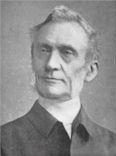
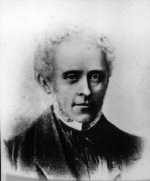
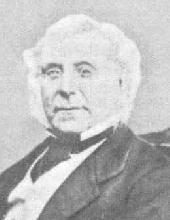
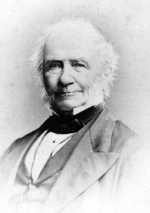
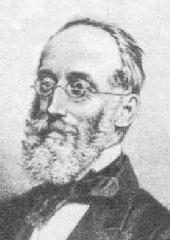
Pictures of some Prominent Brethren Pioneers
Acts 15:22
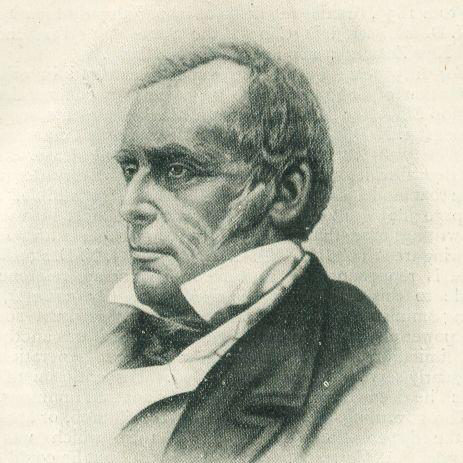
John Nelson Darby 1800-1882
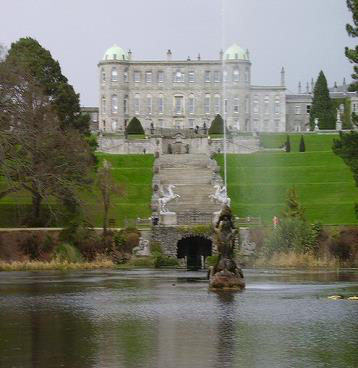
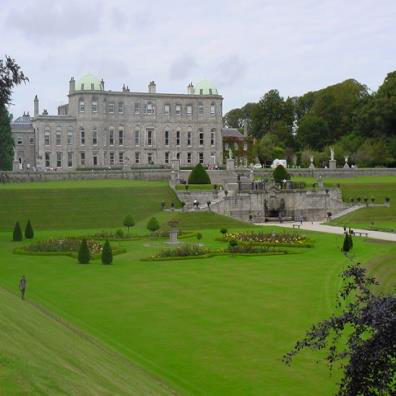
Powerscourt Castle Where Darby used to teach
Powerscourt Castle
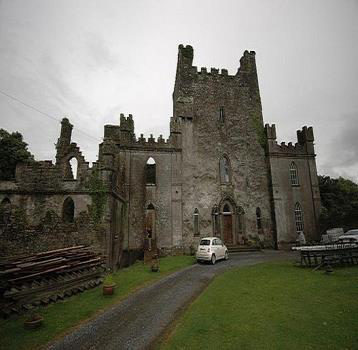
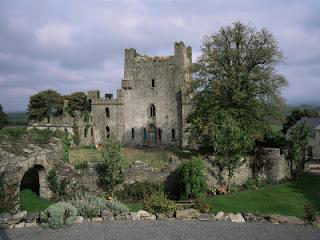
Leap Castle Ancestral home of John Nelson Darby
Leap Castle
William Kelly 1821-1906
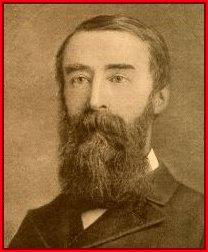
Andrew Miller 1810-1883
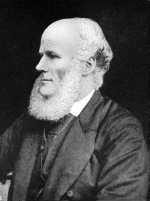
A N Groves 1795-1853
C H Mackintosh 1820-1896
FW Grant 1834-1902
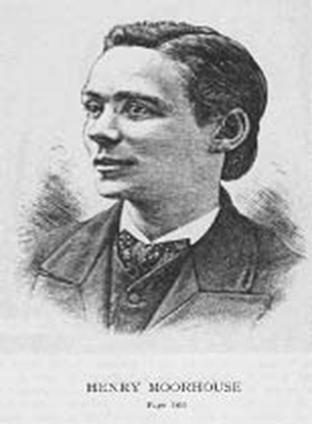
Henry Moorhouse 1840-1880
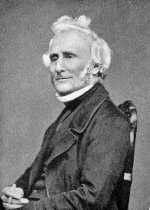
J G Bellet 1795-1864
George Muller 1805-1898
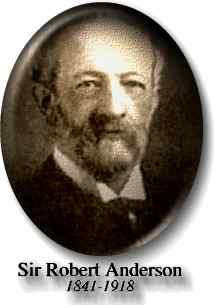
Sir Robert Anderson 1841-1918
George Wigram 1805-1879
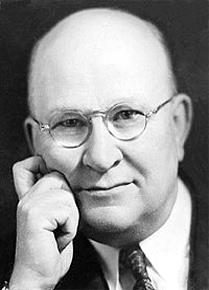
Henry A. Ironside 1876-1951
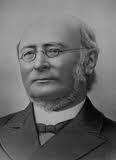
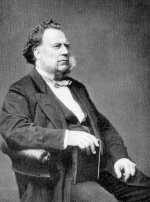
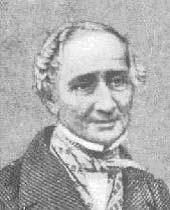
Dr. Edward Cronin 1800-1882
J. B. Stoney 1814-1897
Lord Congleton 1805-1883 This work is compiled from the following books.
-Head Covering by W.E. Vine.
-“Assembly Distinctives” by H.G. Mackay
-The Brethren by Andrew Miller
-Plymouth Brethren by Dr. Sunny Ezhumattoor.
-Characteristics of a New Testament Church by Robert Gessner
-Church Doctrine & Practice edited by John Heading and Cyril Hocking
-New Testament Church Principles by Arthur G. Clarke
-The History of the Brethren 1936. By Napoleon Noel.
-A Historical Sketch Of The Brethren Movement. By H.A. Ironside.
-The Dictionary of Premillennial Theology. Edited by Mal Couch.
-John Nelson Darby, Defender of the Faith. By Larry Crutchfield
STUDY NOTES WERE PREPARED FOR THE YOUTH AT EBENEZER BRETHREN ASSEMBLY IN HOUSTON. IN 2010
